
California's first life-sharing program
Life-sharing: California's newest way to live independently
Life-sharing pairs an adult with an intellectual or developmental disability with a vetted, compatible roommate in a real home, not a group home. Funded through California Regional Centers.
- 95%+ match success
- 100+ matches across California
- Funded through Regional Centers
Let's find the right roommate
Someone from our team will call you soon.
- Want to work as a supportive roommate? Apply here.
- Service coordinator? Use the referral form.
The definition
What is life-sharing?
Life-sharing is a supported living model where an adult with an intellectual or developmental disability shares a home with a carefully matched, vetted roommate who provides personalized day-to-day support.
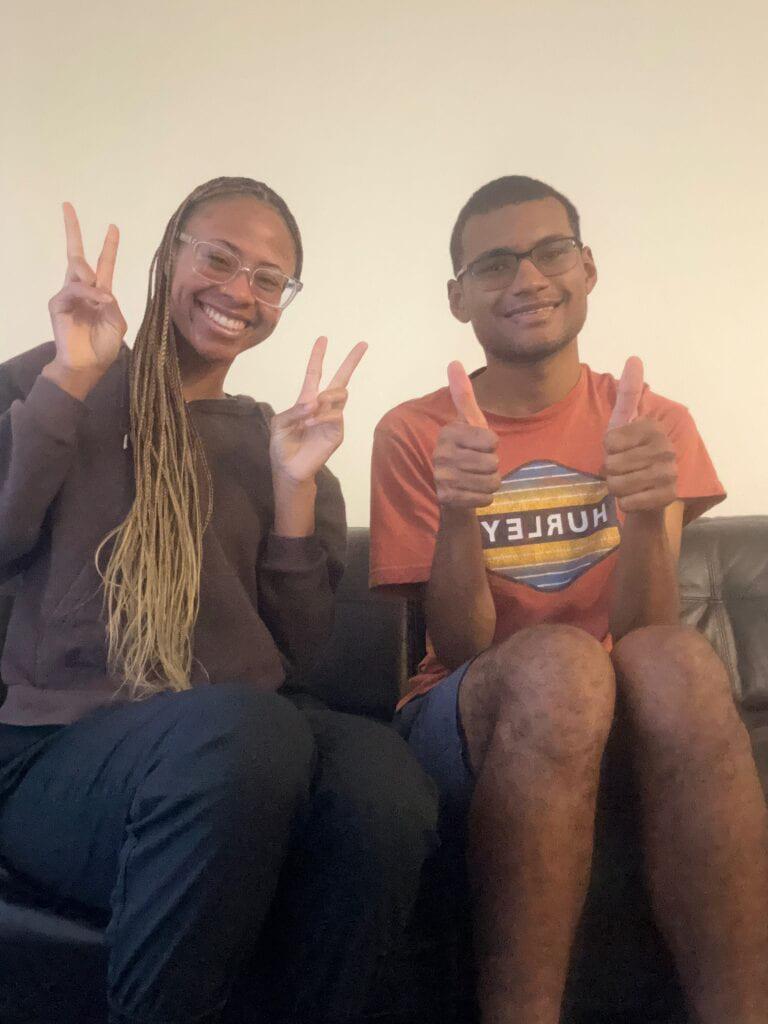
Unlike a group home, life-sharing doesn't run on rotating shift staff or a licensed facility model. The supportive roommate is matched on personality, lifestyle, and interests. They cook dinner together, take rides to work, hang out in the evening. Support shows up inside everyday life, not on top of it.
In California, life-sharing is delivered as Supported Living Services (SLS) and funded through Regional Centers, which means most families pay nothing out of pocket for the support.
- One person, one supportive roommate, one real home
- Matched on personality and interests, not shift availability
- Funded as SLS through California Regional Centers
- An alternative to group homes and licensed facilities
How it compares
Life-sharing vs. group homes, SLS, and ILS
All four are options for adults with IDD in California. Here's how they differ.
| Model | Who lives there | Support style | RC funded? |
|---|---|---|---|
| Life-sharing | Adult with IDD + one vetted roommate, in a real home | Full-time live-in roommate; natural daily support | Yes (as Supported Living Services) |
| Supported Living Services (SLS, standalone) | Adult with IDD in their own apartment, alone or with a peer | Hired staff visit hourly; no live-in support | Yes |
| Independent Living Services (ILS) | Adult lives with family or independently | Skill-building coach visits a few hours/week | Yes |
| Group home (Community Care Facility) | 4 to 6 adults with IDD in a licensed shared facility | Rotating shift staff; structured/institutional model | Yes |
Each pathway fits a different stage of independence. Many California families combine them over time: ILS first, then life-sharing or SLS as the person grows.
How life-sharing works
Five steps from a first call to move-in. Our support continues after.
Intro call
Learn about Homies, ask questions, and see if it's a fit. No commitment.
Assessment and Regional Center referral
Your service coordinator sends us a referral, and our team completes a detailed intake. This isn't about approving or denying. It's about understanding your loved one so we can find the right match.
Roommate matching
We find a rockstar roommate, matched on personality, lifestyle, and interests rather than availability. You might already know someone great, like a friend or former staff member.
Finding a home
Most pairs look for a new place together, and our team helps with the search. Sometimes one person moves into the other's home instead.
Move-in and ongoing support
After move-in, we check in regularly and are available 24/7. Families stay informed.
Who it's for
Who life-sharing is for
Life-sharing fits adults with intellectual and developmental disabilities who want more independence than a group home offers but still need steady day-to-day support.
It's not a fit for everyone, and that's okay. The strongest matches happen when the individual wants this as much as their family does. The right candidate has some kind of daily purpose, openness to sharing a home, and a Regional Center service coordinator who can support the referral.
- Adults with IDD seeking independence outside a group home
- Families exhausted by group home churn and shift turnover
- Regional Center clients with SLS funding (or eligible for it)
- Self-advocates ready to choose where they live and who they live with
- Adults with autism, Down syndrome, cerebral palsy, or other developmental disabilities
What's included in a Homies life-sharing match
24/7 support
Our team is reachable around the clock for anything from a quick question to an urgent need. You're never on your own.
Thorough vetting
Every supportive roommate passes identity verification, then FBI and DOJ background checks, including state court records and the National Sex Offender database. Then come reference checks and a personality and compatibility assessment. Training is finished before any match is made.
Discovery Navigator
A dedicated Discovery Navigator who knows your loved one, coordinates with the Regional Center, and is the single point of contact when anything comes up.
Monthly check-ins
Regular visits after move-in to make sure the match is working. Families stay informed.
Real home, real community
A house or apartment in the community, not a group home or licensed facility. The roommate is a partner, not staff on a shift.
Regional Center funded
Regional Centers have approved Homies to provide Supported Living Services (SLS). Most families pay nothing out of pocket for the support services.
Cost & funding
How life-sharing is funded in California
Regional Centers have approved Homies to provide Supported Living Services (SLS). The support side of life-sharing - the roommate's compensation, our program management, vetting, training, ongoing oversight - is funded through your California Regional Center.
For most families, that means nothing out of pocket for the support. Rent is separate. We aim for a 50/50 rent split. In practice it usually lands closer to 60/40, with the supportive roommate paying the larger share. We go over the exact numbers for your situation on the intro call.
- Support services funded through Regional Centers
- Most families pay $0 out of pocket for support
- Rent split worked out for each pair
- Approved by 9 Regional Centers in California
The numbers behind life-sharing
A real match
After 22 years, Gina got to be just a mom
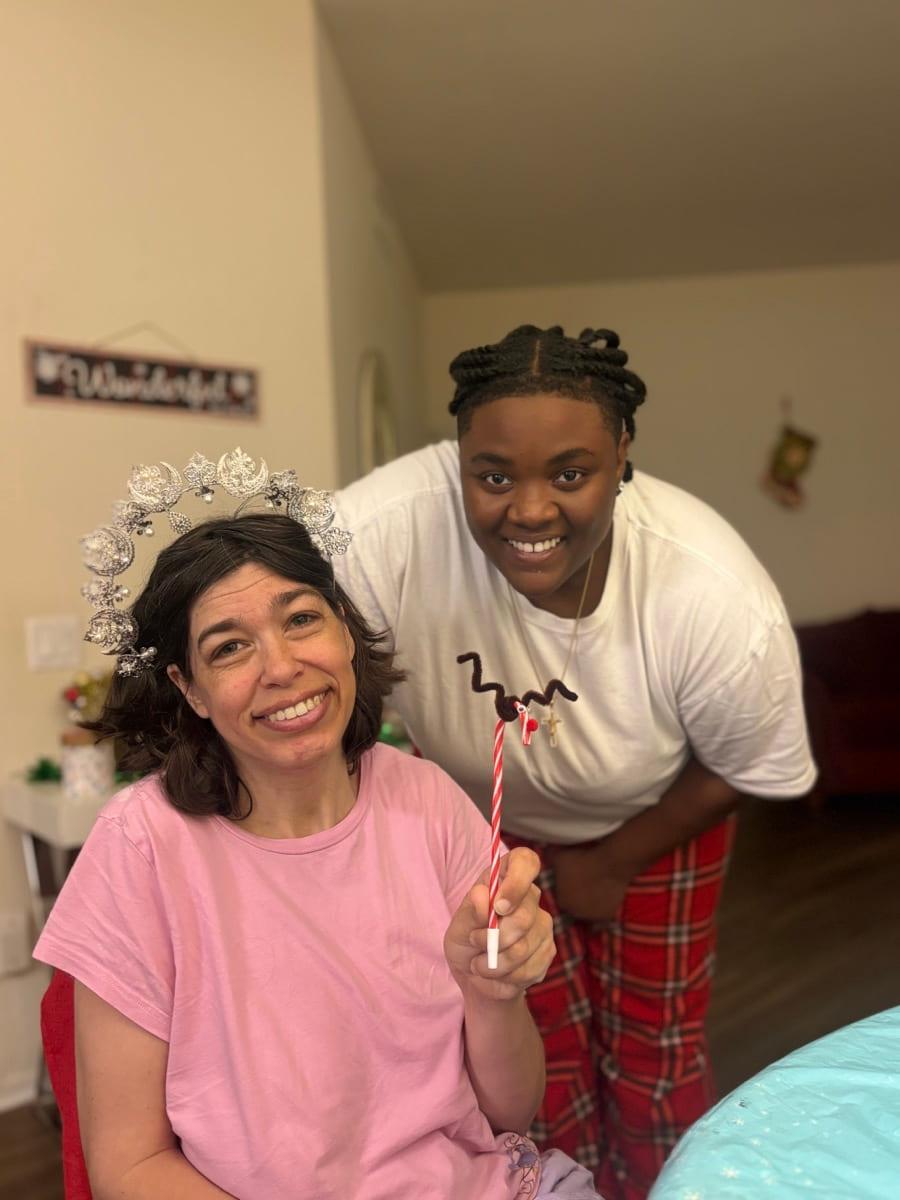
For 22 years, Gina was Abby's caretaker, best friend, and mom, all at once. Every meal, every appointment, every emergency ran through her. The day Homies matched Abby with Katie, that changed.
Now Abby has her own life, her own routines, and a roommate who shows up the way a real friend does. Gina still calls every day. She just doesn't have to do it all anymore.
Life-sharing: frequently asked questions
What is life-sharing?
Life-sharing is a supported living arrangement where an adult with an intellectual or developmental disability shares a home with a carefully matched, vetted roommate who provides personalized day-to-day support. Unlike a group home, life-sharing happens in a real house or apartment in the community, with one dedicated roommate instead of rotating staff. It's an official model of Supported Living Services (SLS) funded through California Regional Centers.
Is life-sharing the same as shared living?
Yes. Life-sharing is what Homies calls shared living. Your loved one lives in a real home with one supportive roommate who helps with daily life. In California, it is funded through the Regional Center as Supported Living Services (SLS).
Is shared living a group home or a facility?
No. Shared housing with Homies happens in a regular house or apartment in the community. Your loved one lives there with one supportive roommate. Nobody works shifts, and nobody rotates in and out. It is a home of their own.
Who can get shared living through Homies?
Adults with an intellectual or developmental disability who are Regional Center clients. Homies is a vendored provider with 9 Southern California Regional Centers. Your service coordinator can add SLS to your loved one's plan and send us a referral.
How is life-sharing different from a group home?
A group home is a licensed facility with multiple residents and rotating shift staff. Life-sharing is one person living with one supportive roommate in a regular home in the community. The roommate is matched on personality and interests, not assigned by a shift schedule. The result is more independence, more privacy, and a genuine relationship rather than a care plan.
Who is life-sharing for?
Life-sharing fits adults with intellectual and developmental disabilities who want more independence than a group home offers but still need consistent day-to-day support. It's a strong fit for Regional Center clients with SLS funding, families exhausted by group home churn, and self-advocates ready to choose where they live and who they live with.
How much does life-sharing cost?
Life-sharing support services are funded through California Regional Centers under the Supported Living Services (SLS) benefit. Most families pay nothing out of pocket for the support itself. Rent is separate. We aim for a 50/50 rent split. In practice it usually lands closer to 60/40, with the supportive roommate paying the larger share. We go over the exact numbers for your situation on the intro call.
Is life-sharing available outside California?
Homies operates in California. Other states have similar life-sharing and shared-living models under different names. Pennsylvania, Vermont, and Massachusetts have established programs. In California, life-sharing is delivered through the Regional Center system, which makes the funding model uniquely accessible compared to most other states.
How are roommates vetted?
Every supportive roommate passes identity verification, then FBI and DOJ background checks, including state court records and the National Sex Offender database. Then come reference checks and a personality and compatibility assessment. Training is finished before any match is made. We have a zero-tolerance policy for violations. Past the paperwork, we look for character and a real wish to support someone's independence.
What if the match does not work out?
We stay in it. Every pair gets a Discovery Navigator who checks in regularly, and there is a support line staffed around the clock. When friction comes up we mediate first, because most of it is ordinary roommate friction. If a match genuinely is not right, we look for a new one. That is rare. It has happened several times, and it has gone well. A second match is easier than the first, because by then we know much more about what the person wants and needs. Our matching process produces a 95%+ success rate across 100+ matches.
Learn more about life-sharing
What is life-sharing? A guide for families
A deeper guide to life-sharing, how it compares to other options, and what to expect.
Read articleHow Homies works
The full process from first call to move-in, with timelines and what to expect.
Read articleWhat happens to my adult child when I'm gone?
The succession planning guide for parents: every California living option compared, plus the legal steps that protect your child.
Read articleReady to learn if life-sharing is the right fit?
Book an intro call. No commitment.