
For parents and families
The alternative to a group home for your adult son or daughter
Homies matches your adult child with a background-checked supportive roommate in a home of their own. You help choose the person and you stay involved. Funded through your Regional Center, so most families pay nothing out of pocket.
- 95%+ match success
- 100+ matches across California
- FBI and DOJ background checks
- Funded through Regional Centers
Request a free call
Tell us who this is for. Someone from our team will call you within 1 to 2 business days.
A better option
What is life-sharing?
Life-sharing is a Supported Living Services (SLS) model. Your family member shares a home with a carefully matched roommate who helps where needed and treats them as an equal.
Compared with a group home, your loved one gets more independence and privacy, and makes their own decisions about daily life.
- One-on-one support, not rotating staff
- Real home in a real neighborhood
- Matched based on compatibility
- Independence with a safety net

Your peace of mind
Checked before they ever meet your loved one
We know what keeps you up at night. Here's what every supportive roommate goes through first.
- Identity verification
- FBI and DOJ background checks
- Reference checks
- Personality and compatibility assessment
- Training before any match
- Regular check-ins and monitoring
- 24/7 emergency support

What families ask first
What does life-sharing cost our family?
Life-sharing is funded through Supported Living Services (SLS) via your Regional Center, typically at no cost to families. Your service coordinator can authorize SLS as part of your Individual Program Plan.
How do I know my family member will be safe?
Every roommate passes FBI and DOJ background checks and reference checks, and finishes training before any match. We check in regularly and our team is available 24/7. See how we screen roommates
What if the match does not work out?
We stay in it. Every pair gets a Discovery Navigator who checks in regularly, and there is a support line staffed around the clock. When friction comes up we mediate first, because most of it is ordinary roommate friction. If a match genuinely is not right, we look for a new one. That is rare. It has happened several times, and it has gone well. A second match is easier than the first, because by then we know much more about what the person wants and needs.
Why families choose Homies
Peace of mind
Your loved one lives with a vetted roommate who cares about them.
Real independence
A real home, not a facility. Your family member makes their own choices.
Compatibility-based matching
Matched on personality, interests, and lifestyle, not availability. Good matches last.
Thorough vetting
All roommates pass FBI and DOJ background checks and reference checks, and finish training before any match.
24/7 support
Our team is available around the clock. Help is one call away.
Family involvement
Stay as involved as you want, in matching and after move-in.
The family journey
Intro call
Learn about Homies, ask questions, and see if it's a fit. No commitment.
Assessment and Regional Center referral
Your service coordinator sends us a referral, and our team completes a detailed intake. This isn't about approving or denying. It's about understanding your loved one so we can find the right match.
Roommate matching
We find a rockstar roommate, matched on personality, lifestyle, and interests rather than availability. You might already know someone great, like a friend or former staff member.
Finding a home
Most pairs look for a new place together, and our team helps with the search. Sometimes one person moves into the other's home instead.
Move-in and ongoing support
After move-in, we check in regularly and are available 24/7. Families stay informed.
What families are saying
Hear from parents who found peace of mind through Homies

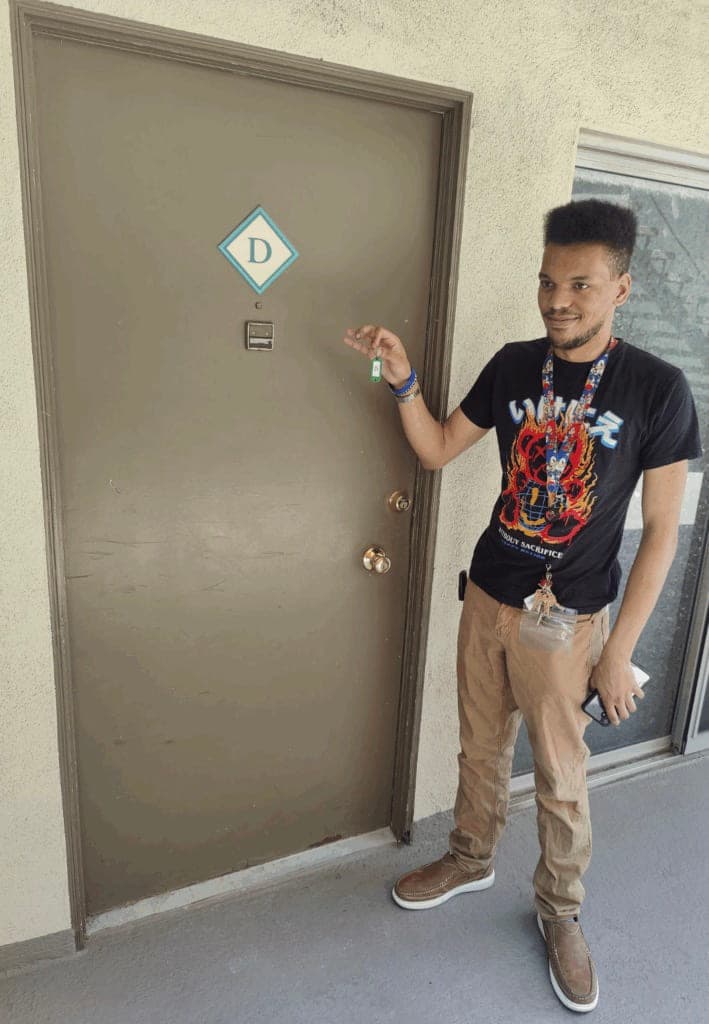

Questions from families
How do I know my family member will be safe?
Every supportive roommate passes identity verification, then FBI and DOJ background checks, including state court records and the National Sex Offender database. Then come reference checks and a personality and compatibility assessment. Training is finished before any match is made. After move-in, we check in regularly and are available 24/7.
How involved can our family be in the process?
As involved as you want. Many families join meet-and-greets, help with the move, and stay in regular contact with the roommate. We keep you updated on how things are going.
What if the match does not work out?
We stay in it. Every pair gets a Discovery Navigator who checks in regularly, and there is a support line staffed around the clock. When friction comes up we mediate first, because most of it is ordinary roommate friction. If a match genuinely is not right, we look for a new one. That is rare. It has happened several times, and it has gone well. A second match is easier than the first, because by then we know much more about what the person wants and needs.
How long does it take to find a match?
Finding a match usually takes 2 to 6 weeks, depending on your family member's specific needs and preferred location. From your first call to move-in, plan on 1 to 3 months. We never rush the process. Finding the right match is more important than finding a quick one.
What does life-sharing cost our family?
Life-sharing is funded through Supported Living Services (SLS) via your Regional Center, so there's typically no out-of-pocket cost to families. Your service coordinator can authorize SLS hours as part of your Individual Program Plan (IPP).
Whose home is it?
Most pairs find a new place together. Sometimes one person moves into the other's home. Either way, both names are on the lease. Homies is not a landlord, so nobody can move your son or daughter out of their own home.
Can my family member still see us regularly?
Yes. Life-sharing is about independence, not isolation. Your family member can visit, have you over, and stay close, like anyone living on their own.
What training do supportive roommates receive?
Roommates are trained in safety, communication, person-centered support, and emergency procedures. Training continues after move-in, with extra help for specific needs.
How is Homies different from a group home?
Life-sharing means living in a real home with one compatible roommate, not a facility with multiple residents and rotating staff. Your family member gets more privacy and more choice.
See life-sharing in action
Read the full stories behind our matches


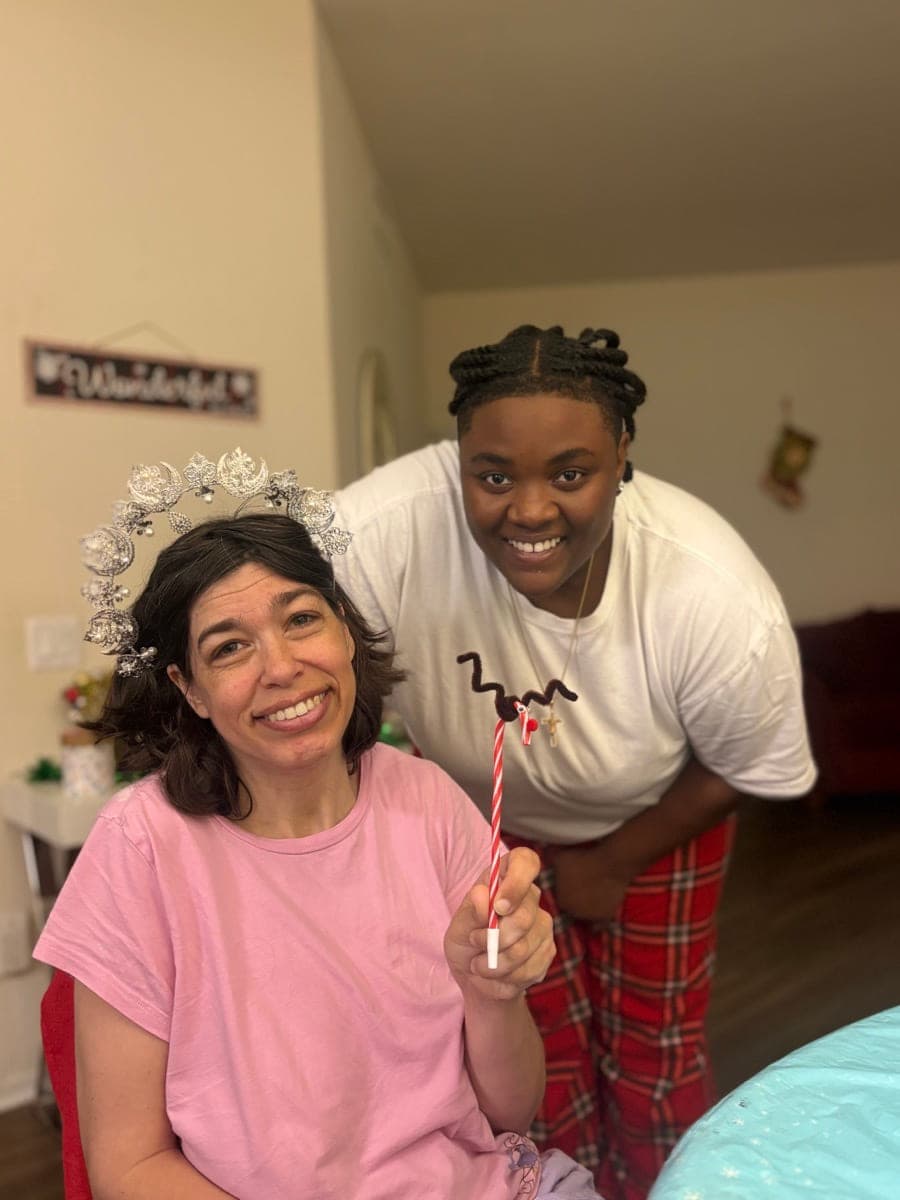



Resources for families
What happens to my adult child when I'm gone?
The succession planning guide: every California living option compared, the legal steps that protect your child, and a decade-by-decade timeline.
Read articleLife-sharing vs. group homes
Side-by-side comparison of life-sharing and group homes: privacy, support ratio, cost, and outcomes.
Read articleHousing for autistic adults in California
Sensory-friendly, autism-aware housing options for adults in California, from SLS to life-sharing.
Read articleLet's talk about your family's needs
Tell us about your loved one and we'll talk through how life-sharing could work. No pressure.