
Become a supportive roommate
Make a difference while earning meaningful income
Help an adult with a disability live independently. Share a home, build a friendship, and earn $20,000 to $50,000 a year, tax-free.

The role
What is a supportive roommate?
A supportive roommate is someone who gets paid to live with an adult with a disability, providing daily support while building a genuine friendship. In California, it is a real funded role: Regional Centers pay for the support through Supported Living Services (SLS).
This isn't traditional caregiving. You live together, help with daily activities, and bring your roommate into your life and community.
- Share a home and daily life
- Provide personalized support
- Build a meaningful friendship
- Help your roommate achieve their goals

Competitive compensation
Share a home and get paid to support someone
$20,000 to $50,000 a year
Tax-free income for supporting your roommate at home
A home you choose
Most pairs find a new place together, and our team helps with the search
Flexible schedule
Create a routine that works for both you and your roommate
Training & support
Training and 24/7 support from our team
Why become a supportive roommate?
Meaningful work
Make a real difference in someone's life, and build a friendship along the way.
Tax-free income
Earn $20,000 to $50,000 a year, tax-free, funded through the Regional Center.
Flexible lifestyle
Keep your job, school, or other commitments.
Training & support
Training before you start, and support from our team after.
A home you choose
Most pairs find a new place together, and our team helps with the search.
Community impact
Help change how adults with disabilities live in California.
Requirements
- Be at least 18 years old
- Have at least two years of experience supporting people with disabilities
- Have a valid driver's license and reliable transportation
- Pass FBI and DOJ background checks
- Complete required training and certification
- Be willing to share a home with a roommate
- Have patience, compassion, and good communication skills
- Be committed to supporting someone's independence goals
Application process
Submit your application
Tell us about your background, your interests, and what you want in a roommate.
First interview
Meet with our team to discuss your experience, motivations, and what life-sharing would look like in your home.
Background check & training
Pass the required background checks and complete our training on supporting people with disabilities.
Profile & matching
Create your profile and work with our matching team to find a compatible roommate.
Meet your match
Meet potential matches in person, get to know each other, and decide together if it's the right fit.
Hear from our roommates

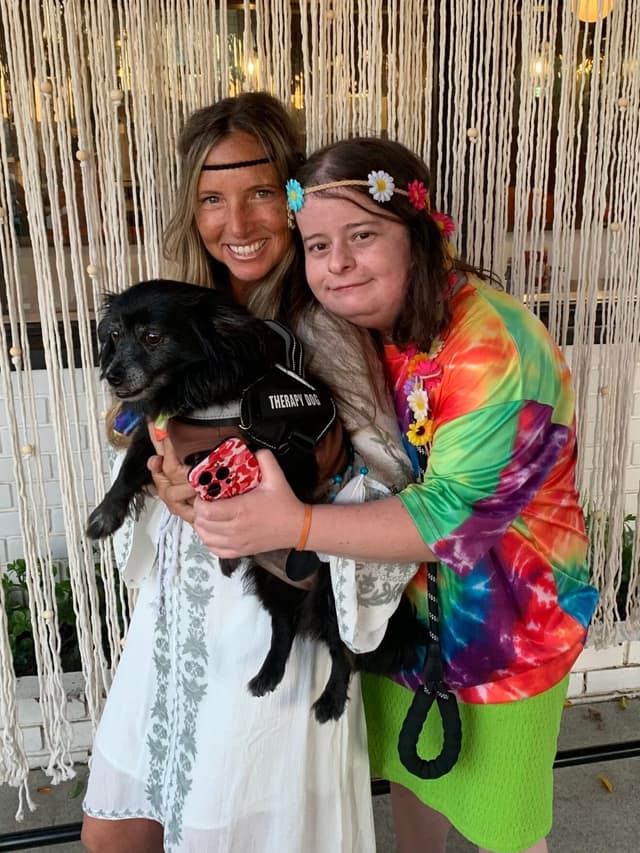
“Living with Eddie has completely changed my perspective on what matters in life. We cook together, explore the neighborhood, and celebrate each other's wins. It's not caregiving. It's friendship.”

Frequently asked questions
Can you get paid to live with an adult with autism or another disability?
Yes. In California, the role is called a supportive roommate, and it is a real paid position, not an informal arrangement. You share a home with an adult with an intellectual or developmental disability and provide day-to-day support inside ordinary life: cooking, rides, reminders, companionship. The funding comes through California Regional Centers under Supported Living Services (SLS), and programs like Homies handle the matching, background checks, training, and payment. Supportive roommates earn $20,000 to $50,000 a year, tax-free under IRS rules for live-in providers.
What does a supportive roommate do?
You share a home with someone with a disability and help with daily life: cooking, rides, social activities, errands. Most of all, you build a friendship based on mutual respect.
How much can I earn as a supportive roommate?
$20,000 to $50,000 a year, tax-free, funded through the Regional Center. Where you land in that range depends on how many hours of support your roommate needs.
Do I need experience working with people with disabilities?
Yes. Every supportive roommate has at least two years of experience supporting people with disabilities. We train everyone on top of that. Patience and a real wish to support someone's independence matter just as much.
Can I work another job while being a supportive roommate?
Yes. Many supportive roommates work or go to school. Life-sharing fits support into daily life. It isn't 24/7 supervision. We'll find a match whose needs fit your schedule.
Do we live in my home or somewhere new?
Most pairs find a new place together. Sometimes one person moves into the other's home. Either way, both names are on the lease.
What if I rent my home?
You can still be a supportive roommate if you rent. You'll need written permission from your landlord, and your lease must allow for an additional occupant. Many landlords are supportive once they understand the program.
What support does Homies provide to roommates?
Training before you start, ongoing education, 24/7 emergency support, regular check-ins, and a community of fellow supportive roommates.
Stories from our roommates
What is life-sharing?
The model you're stepping into: what life-sharing means in practice and why it works.
Read articleLife-sharing vs. group homes
How life-sharing differs from group homes, and why your roommate chose this path over a facility.
Read articleCoaching to roommates: Eddy and Robert's story
How a 15-year coaching relationship turned into a life-sharing partnership.
Read articleApply to become a supportive roommate
Tell us a little about yourself. It's a short form.