Independent Living After College: Cole's Story

What Happens After a Transition Program Ends?
For families of adults with intellectual and developmental disabilities, graduation from a college transition program is bittersweet. Programs like Wayfinders at Fresno State, Pathway at UCLA, and similar initiatives across California do incredible work teaching independence skills. But then comes the question every parent dreads:
What's next?
Your son or daughter has learned to manage their schedule, cook basic meals, and navigate a campus. But transitioning from a structured college environment to truly independent living is a massive leap. Many families find themselves back at square one, wondering if their child will move back home or if there's another path forward.
Cole's story shows there is.
Meet Cole: From Wayfinders Graduate to Independent Living Success
Cole graduated from the Wayfinders program at Fresno State, one of California's premier transition programs for young adults with disabilities. The program gave him exactly what it promises: skills for independence, confidence, and a taste of life on his own terms.
After graduation, Cole moved back home to San Diego. It wasn't a step backward. He landed a job and spent a year coaching football at Coronado High School alongside his dad. But Cole knew this was temporary. He'd experienced independence at Fresno State, and he wanted it back.
Cole was ready for the next chapter: true independent living.
He wanted his own space. His own schedule. His own community. Not a group home with rotating staff. Not living with his parents forever. A real life, in a real apartment, with people who actually wanted to be there.
Finding the Right Living Situation
For many families, the options after a transition program feel limited:
Move back home: Safe, but not independence
Group home: Institutional, with multiple residents and staff turnover
Apartment alone: Too much, too fast for most
Life-sharing: A genuine roommate who provides support
Cole's family chose life-sharing through Homies.
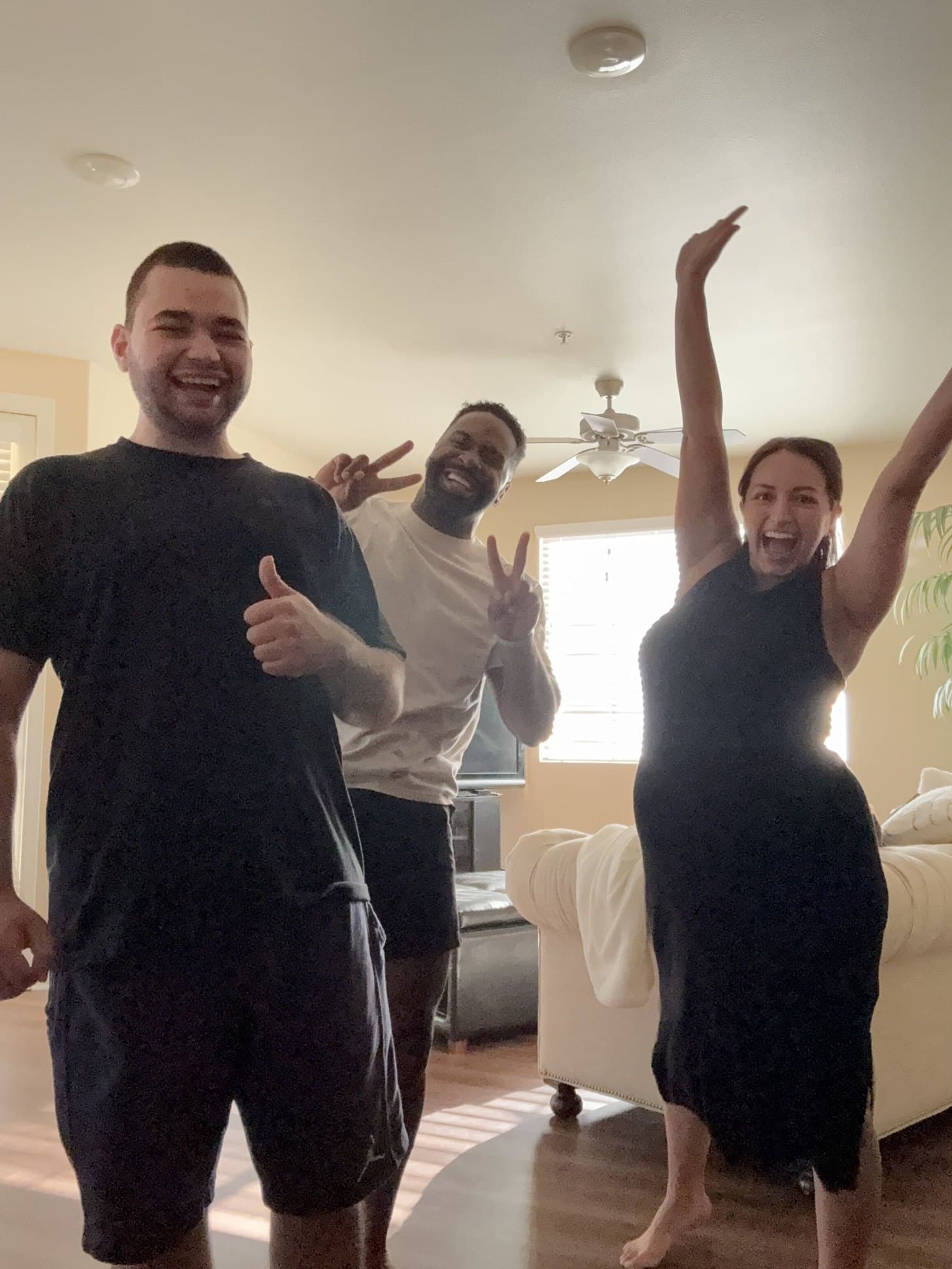
After a careful matching process, Cole connected with Taylor and Jimmy, two supportive roommates living in North Park, one of San Diego's most vibrant neighborhoods. They weren't staff. They weren't caregivers in the traditional sense. They were roommates: people who happened to provide the daily support Cole needed while sharing life together.
What Independent Living Actually Looks Like
Since moving in, Cole has been crushing it. He's using the "independent living skills" he learned at Wayfinders every day:
Waking up on time for work
Cooking meals and managing his kitchen
Handling his own schedule without constant reminders
Getting himself to and from work reliably
But here's what the skills checklists don't capture: social expansion.
One of the biggest challenges for adults with disabilities isn't the daily tasks. It's isolation. Group homes often keep residents in a bubble. Living with parents, while loving, limits social circles. But life-sharing with compatible roommates opens doors.
Halloween in North Park
This past Halloween, Cole didn't sit at home passing out candy. He dressed up as Patrick Mahomes, hit the town with Taylor and Jimmy, and met all their friends.
The key moment was when people met him. They didn't meet "Jimmy's client" or "Taylor's responsibility." They met Cole. A guy in a great costume who was fun to hang out with.
That's the difference between being cared for and actually living.
Christmas Gift Exchange
Just this month, Cole and his roommates held their household Christmas gift exchange. Cole scored a Kansas City Chiefs mug (to match the Mahomes costume) and some cologne, which he's specifically saving to help him find a girlfriend in 2026.
This is what independent living looks like. Not a checklist of skills. A life filled with inside jokes, shared traditions, and goals for the future.
Why Life-Sharing Works After Transition Programs
Transition programs like Wayfinders do an incredible job, but they operate within a structured environment. Students have resident advisors, scheduled activities, and built-in community. When that structure disappears at graduation, many young adults struggle.
Life-sharing bridges that gap:
| Transition Program | Life-Sharing with Homies |
|---|---|
| Structured schedule | Flexible, real-world routine |
| Built-in peer community | Roommates + their social networks |
| Staff support | Roommate support (natural, not clinical) |
| Campus environment | Real apartment in real neighborhood |
| Temporary (2-4 years) | Long-term sustainable living |
The roommate model works because it's normal. Millions of young adults live with roommates after college. For adults with disabilities, having a supportive roommate just means that roommate provides some additional help, while still being a genuine friend and housemate.
What Families Should Know
If your adult child is approaching graduation from a transition program, here's what Cole's story teaches us:
1. Don't Rush the Timeline
Cole spent a year at home after Wayfinders, working and coaching football. That wasn't failure. It was a bridge. Finding the right living situation takes time, and that's okay.
2. Independence Doesn't Mean Alone
True independence isn't about doing everything yourself. It's about having choice and control over your life. Cole has support from Taylor and Jimmy, but he decides his schedule, his meals, his social life.
3. Social Connection Matters More Than Skills
Cole already had the daily living skills. What life-sharing gave him was community: roommates who include him in their lives, friends who know him as Cole, not as someone's client.
4. The Right Match Makes Everything Work
Not every roommate situation works. Homies has a 95%+ match success rate because we focus on compatibility: personality, interests, lifestyle. Filling beds is not the goal.
How to Get Started
If you're exploring independent living options for your adult child with a disability in California, here's the path forward:
Talk to your Regional Center: Ask about Supported Living Services (SLS) and life-sharing options
Contact Homies: We'll explain how our matching process works and whether it's a fit
Start the conversation early: From first call to move-in usually takes 1 to 3 months, so begin before the transition program ends
You don't have to figure this out alone. And your son or daughter doesn't have to choose between moving back home and a group home. There's another path, one that looks a lot like the life any young adult wants after college.
Just ask Cole.
Frequently Asked Questions
What is life-sharing for adults with disabilities?
Life-sharing is a supported living arrangement where an adult with a disability lives with a compatible roommate who provides daily assistance. Unlike group homes, life-sharing happens in regular apartments or houses, with one-on-one support from someone who shares your life. The care tasks are one part of that.
How is life-sharing funded in California?
Life-sharing through Homies is funded by California Regional Centers through Supported Living Services (SLS). For most families, there's no out-of-pocket cost for the support services.
What's the difference between a supportive roommate and a caregiver?
A caregiver typically works shifts and leaves. A supportive roommate lives with you, shares meals, hangs out together, and provides support naturally through daily life. It's a roommate relationship first, with support built in.
How long does it take to find a match?
Finding a match usually takes 2 to 6 weeks, depending on location and specific needs. From your first call to move-in, plan on 1 to 3 months. We never rush the process. Finding the right match matters more than finding a fast one.
Can my child keep their job while living with a supportive roommate?
Absolutely. Many Homies clients work jobs in their community. Supportive roommates can help with transportation, morning routines, and other support that makes employment sustainable.
Looking for independent living options after a transition program? Contact Homies to learn how life-sharing could work for your family.
Request a free call
Tell us who this is for. Someone from our team will call you within 1 to 2 business days.