Homies is now an official Supported Living Services vendor. Contact us to learn more.

Back to News
Success StoriesIndependent Living

She Moved 2,000 Miles to Be Nicole's Roommate—Here's Their Story

January 15, 2026Homies Team
She Moved 2,000 Miles to Be Nicole's Roommate—Here's Their Story

When a Parent Can No Longer Be the Caregiver

For many families of adults with cerebral palsy, there comes a moment that changes everything: the realization that mom or dad can no longer provide the level of care their child needs.

Maybe it's aging. Maybe it's health issues. Maybe it's simply exhaustion after decades of caregiving. Whatever the reason, the question hits hard:

What happens now?

This was exactly the situation Nicole's family faced when San Diego Regional Center reached out to Homies. Nicole, a young woman with cerebral palsy who requires around-the-clock support, was facing a major life transition. Her mom, who had been her primary caregiver for years, could no longer fill that role.

Nicole needed more than just a caregiver. She needed someone who could step into her life as a trusted companion, a source of friendship, and a genuine support system.

It was a big ask. Nicole's needs go beyond what we typically see at Homies. But that's exactly what we're here for.

The Challenge of Finding 24/7 Care That Actually Works

When someone needs round-the-clock support, the options often feel limited:

  • Skilled nursing facility — Institutional setting, loss of independence

  • Rotating shift caregivers — Different people constantly, no real relationship

  • Family continues caregiving — Burnout, not always possible

  • Live-in caregiver (traditional) — High turnover, hard to find the right fit

  • Life-sharing / Supportive Roommate — One consistent person who shares your life

The problem with most options isn't the care itself—it's the lack of genuine connection. When you have different staff rotating through your home, you never build the trust and rapport that makes daily life feel normal. You're always being "cared for" rather than living with someone who knows you.

That's why life-sharing works differently. A supportive roommate isn't staff. They're a roommate who happens to provide support—someone who shares your home, your meals, your routines, and your life.

Finding Nicole's Perfect Match

We started by creating Nicole's Homies profile—a detailed picture of who she is:

  • Her likes and dislikes

  • Her hobbies and interests

  • What she's looking for in a roommate

  • Her specific support needs

  • Her communication style and preferences

Then we shared that profile with our networks and waited to see who might be the right fit.

Within a couple of weeks, Jordan applied.

What Made Jordan Stand Out

Right away, we saw something special. Jordan and Nicole shared similar interests, but what stood out most was Jordan herself. She exemplified everything we look for in a supportive roommate:

  • Trustworthy — Her background check was clean, but more importantly, her character shone through

  • Reliable — Consistent, dependable, someone you can count on

  • Genuinely caring — Not doing this as "just a job"

Her references didn't just vouch for her—they raved about her. One person described Jordan as "the most amazing human being ever."

That kind of endorsement matters when you're matching someone who needs a person they can truly count on.

Through interviews and conversations, Jordan showed us exactly who she is—someone who could come in and feel like family from day one. That's not something you can fake.

Taking the Leap: From Georgia to San Diego

Here's where the story gets even better.

Jordan was living in Georgia. She'd always dreamed of moving to San Diego but had never found the right opportunity. Nicole already had a two-bedroom apartment lined up.

Sometimes things just align.

After about a month of virtual meetings and getting to know each other, they both made the decision:

  • Jordan packed up her life and moved across the country

  • Nicole welcomed a new roommate into her home

  • Together, they became part of the Homies family

This kind of commitment—relocating 2,000+ miles for the right match—shows exactly what we mean when we talk about compatibility over convenience. Jordan didn't just want a caregiving job. She wanted to build a life in San Diego, and supporting Nicole was the opportunity that made it possible.

Building a Life Together

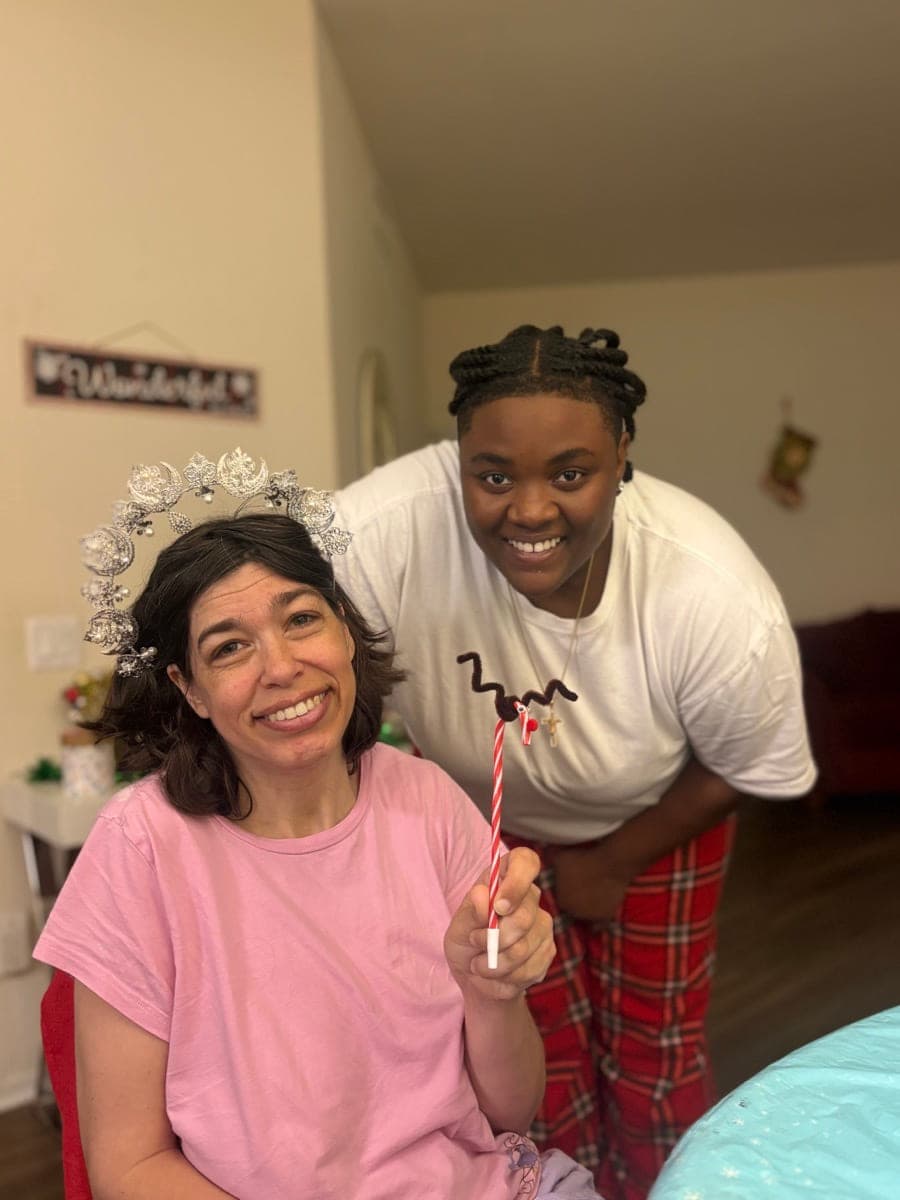
Since Jordan moved in, they've wasted no time making memories:

  • Christmas party to celebrate Jordan's arrival

  • SeaWorld adventures exploring the park together

  • La Jolla Cove trips enjoying San Diego's beautiful coastline

  • Weekly bingo nights — a tradition they've made their own

At home, Jordan has become the meal planning queen—helping Nicole discover healthy options and cooking meals they share together. It's the kind of everyday routine that builds real connection.

The Real Measure of Success: Communication and Advocacy

Most importantly, they've developed great communication. Nicole feels comfortable advocating for herself, speaking up about what she needs and wants.

That's what independence looks like.

Not doing everything alone. Having the support and trust to be heard. Making your own choices about your own life, with someone by your side who respects and supports those choices.

What This Means for Families Facing Similar Transitions

Nicole's story isn't unique. Across California, families are facing the same question: what happens when a parent can no longer be the primary caregiver?

Here's what Nicole's experience teaches us:

1. The Right Match Exists (Even If It Takes Time)

Jordan was in Georgia. Nicole was in San Diego. They found each other because Homies cast a wide net and focused on compatibility, not just proximity.

2. High Support Needs Don't Mean Institutional Care

Nicole requires 24/7 support. She still lives in her own apartment, in her own community, making her own choices. The level of care you need doesn't determine your right to independence.

3. Transitions Can Lead to Something Better

Losing a parent as your caregiver is painful and scary. But it can also be the beginning of a new chapter—one where you have a peer relationship with your support person, not a parent-child dynamic.

4. Real Relationships Beat Rotating Staff

Jordan isn't Nicole's employee. She's her roommate. They share a home, cook together, go on adventures together. That continuity and connection is something shift-based care can never provide.

How Homies Supports High-Needs Matches

Not every supported living provider can handle matches like Nicole's. Here's what made this work:

  • Detailed profiling — Understanding exactly what Nicole needed and wanted

  • Wide recruitment — Not limiting our search to local candidates

  • Thorough vetting — Background checks plus deep reference conversations

  • Extended matching period — A month of virtual meetings before committing

  • Ongoing support — We don't disappear after move-in

If you're exploring options for an adult with cerebral palsy or other significant support needs, contact us to discuss whether life-sharing could work for your situation.

A Journey Just Beginning

Jordan and Nicole's story is just getting started, but the foundation is strong. Nicole has found someone she trusts, someone she likes, someone she feels empowered to live with. She has the support system she needs to live independently, to thrive in her own space, on her own terms.

Transitions are never easy, especially one this significant. But having someone like Jordan by her side is going to make all the difference.

Here's to an awesome year for Jordan and Nicole. 🎉


Frequently Asked Questions

Can someone with cerebral palsy live independently?

Yes. With the right support, adults with cerebral palsy can live independently in their own homes. The key is having consistent, reliable support tailored to their specific needs—which is exactly what life-sharing provides.

What's the difference between a live-in caregiver and a supportive roommate?

A traditional live-in caregiver is an employee who lives in your home to provide care. A supportive roommate is a genuine roommate who shares your home and life while providing support. The relationship is peer-to-peer, not employer-employee.

How do you find supportive roommates for people with high support needs?

We cast a wide net, looking for people whose lifestyle and values align with the person they'd be supporting. For Nicole, that meant finding Jordan in Georgia—someone willing to relocate for the right opportunity.

Is life-sharing covered by Regional Center?

Yes. Life-sharing through Homies is funded by California Regional Centers through Supported Living Services (SLS). For most families, there's no out-of-pocket cost for the support services.

What if my family member needs 24/7 care?

Life-sharing can work for people who need round-the-clock support. The supportive roommate lives in the home full-time, providing consistent presence and care. For specific medical needs, additional services can be coordinated.


Exploring care options for an adult with cerebral palsy or other disabilities? Contact Homies to learn how life-sharing could provide the independence and support your family member deserves.

Tags:Success Stories, Independent Living
View All Stories

Ready to learn more?

Discover how life-sharing can transform your life or the life of someone you care about.